Religious Sites
Explore peaceful mosques, see UNESCO monasteries, and step into tekkes where faith has lived for centuries.
.jpg)
Tomb of Murad I
The sacred site marking the assassination of Ottoman Sultan Murad I during the pivotal Battle of Kosovo in 1389 – a place of prayer and remembrance.
Tyrbja e Sultan Muratit
Guardian Angel Catholic Church
A quiet sanctuary of Albanian faith – built in 1926, a modest but enduring symbol of Catholic presence in Ferizaj.
Kisha Katolike e Engjëllit Rojtar
Church-Mosque Complex
A rare symbol of coexistence – a Serbian Orthodox church and an Islamic mosque sharing the same courtyard, defying division with architectural proximity and civic grace.
Xhamia Madhe dhe Kisha - Ferizaj
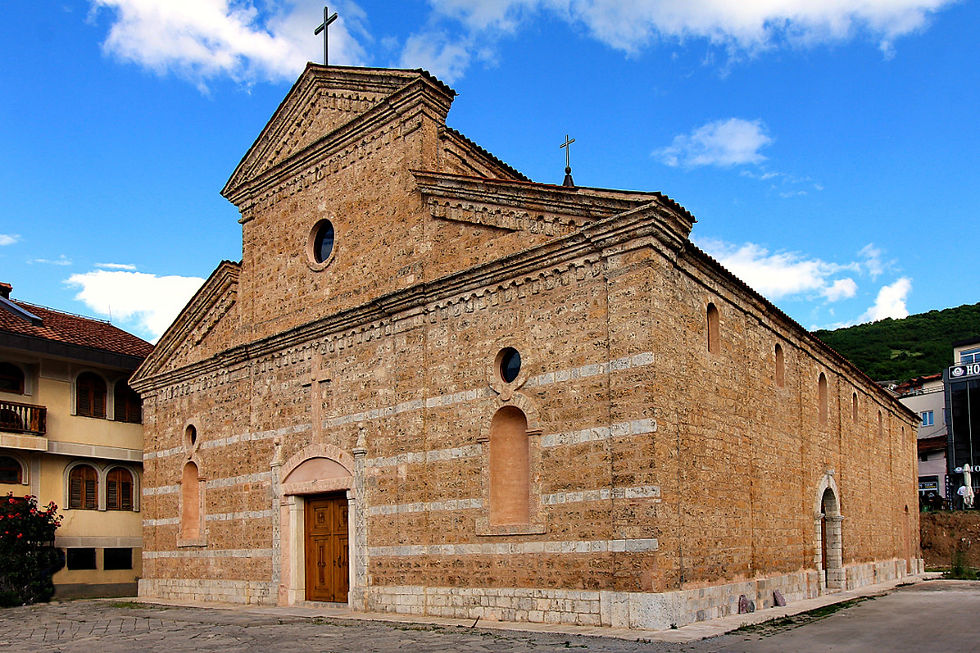
Our Lady of Ljeviš
A UNESCO World Heritage masterpiece from the 14th century, celebrated for its decorative “Persian” brick facade and surviving Byzantine frescoes.
Kisha e Shën Premtes (Kisha e Levishës)
Sinan Pasha Mosque
The largest and most prominent mosque in Prizren, dominating historic Shadërvan Square with its massive central dome and tall minaret.
Xhamia Sinan Pashës
Jashar Pasha Mosque
Pristina’s Ottoman jewel – carved stone, slender minarets, and civic legacy converge in a 19th-century sanctuary that still anchors the city’s spiritual rhythm.
Xhamia Jashar Pashës
Mother Teresa Cathedral
Pristina’s towering tribute to compassion – modern Catholic architecture honoring the Albanian-born saint with grandeur, serenity, and civic pride.
Katedralja Nëna Tereza
Saint George Orthodox Church
The cathedral of the Serbian Orthodox Eparchy of Raška and Prizren – built 1856-1887, embodying centuries of faith, resilience, and architectural grace.
Kisha Ortodokse Shën Xhorxhit
Bajrakli Mosque (Çarshi Mosque)
Kosovo’s oldest surviving mosque – built in 1471, where a single soaring dome and centuries of resilience echo through the heart of Peja’s bazaar.
Çarshi Xhamia
Gračanica Monastery
A UNESCO-listed medieval masterpiece of Serbo-Byzantine architecture and sacred frescoes – a sanctuary of spiritual and cultural resilience.
Manastiri i Graçanicës
Catholic Church of St. Catherine
Peja’s quiet beacon of continuity – built in 1928 atop a 1722 foundation, anchoring the city’s Catholic community with understated grace.
Kisha e Shën Katerinës
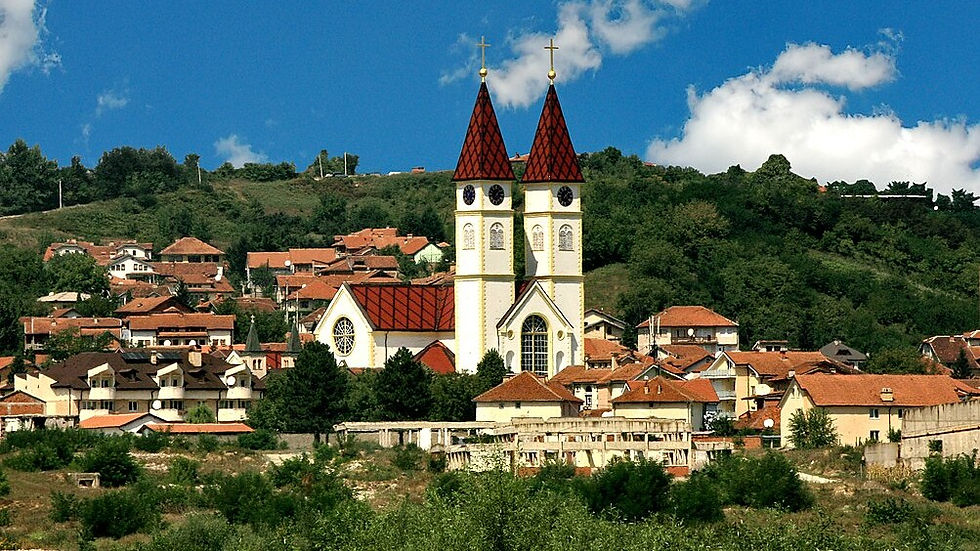
Our Lady of Perpetual Succour
Built in 1870, blending Austro-Hungarian elegance with Balkan devotion – a quiet pillar of faith and a rare glimpse into Kosovo’s Catholic heritage.
Katedralja e Zojës Ndihmëtare
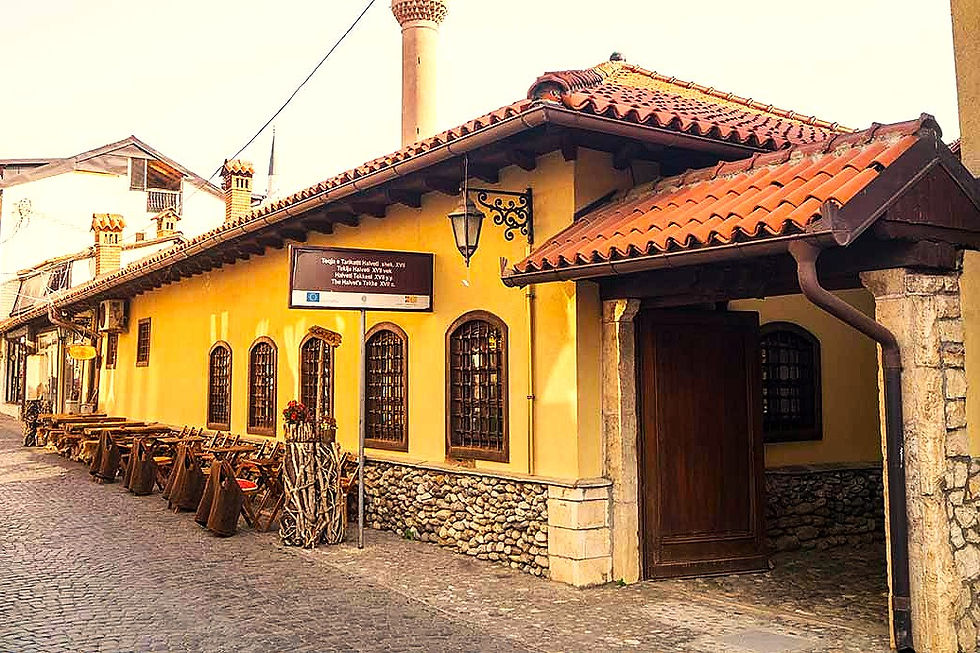
Halveti Tekke
An 18th-century Sufi lodge where ritual, poetry, and mysticism converge in a quiet courtyard that still pulses with devotion and cultural memory.
Teçja Halveti e Saraçhanës
Defterdar Mosque
Peja’s ledger of Ottoman legacy – built in 1570 by a high-ranking imperial treasurer, where centuries of worship, destruction, and restoration converge.
Xhamia Defterdar
Imperial Mosque (Fatih Mosque)
Kosovo’s oldest standing mosque – built by Sultan Mehmed the Conqueror in 1461, anchoring Pristina’s Ottoman legacy with its soaring dome and centuries of uninterrupted prayer.
Xhamia e Mbretit
Church of St. Paul and St. Peter
One of Gjakova’s most prominent religious landmarks, known for its post-war reconstruction and the unique tradition of interfaith participation during major holidays.
Kisha Katolike e Shën Palit dhe Shën Pjetrit
Tekke of Sheh Emini
An 18th-century Rufai Sufi tekke in Gjakova’s Old Bazaar – a spiritual center and a museum of traditional Albanian architecture.
Teqeja e Sheh Eminit


.jpg)
.jpg)
.jpg)
.jpg)

.jpg)

.jpg)


%20(1).jpg)